


 11 / 116

Making a rice paddy changes the environment. Humans cause these
changes. Other organisms change the environment, too. The changes to
the environment can affect the well-being of other organisms.
Muskrats live in aquatic environments. They make their homes by
tunneling into the banks of streams and ponds. Muskrats can live in the
earthen walls that surround rice paddies. The muskrat tunnels can weaken
the walls and cause them to break. When the wall breaks, the water flows
out. The paddy changes back to a terrestrial environment. When this
happens, the muskrat and all the other aquatic organisms must find
new homes.
Muskrats causing rice paddy walls to break is one example of how an
organism can change the environment. The change in this example is
detrimental to the organism and to the other aquatic organisms. But the
land organisms benefit because there is more terrestrial environment.
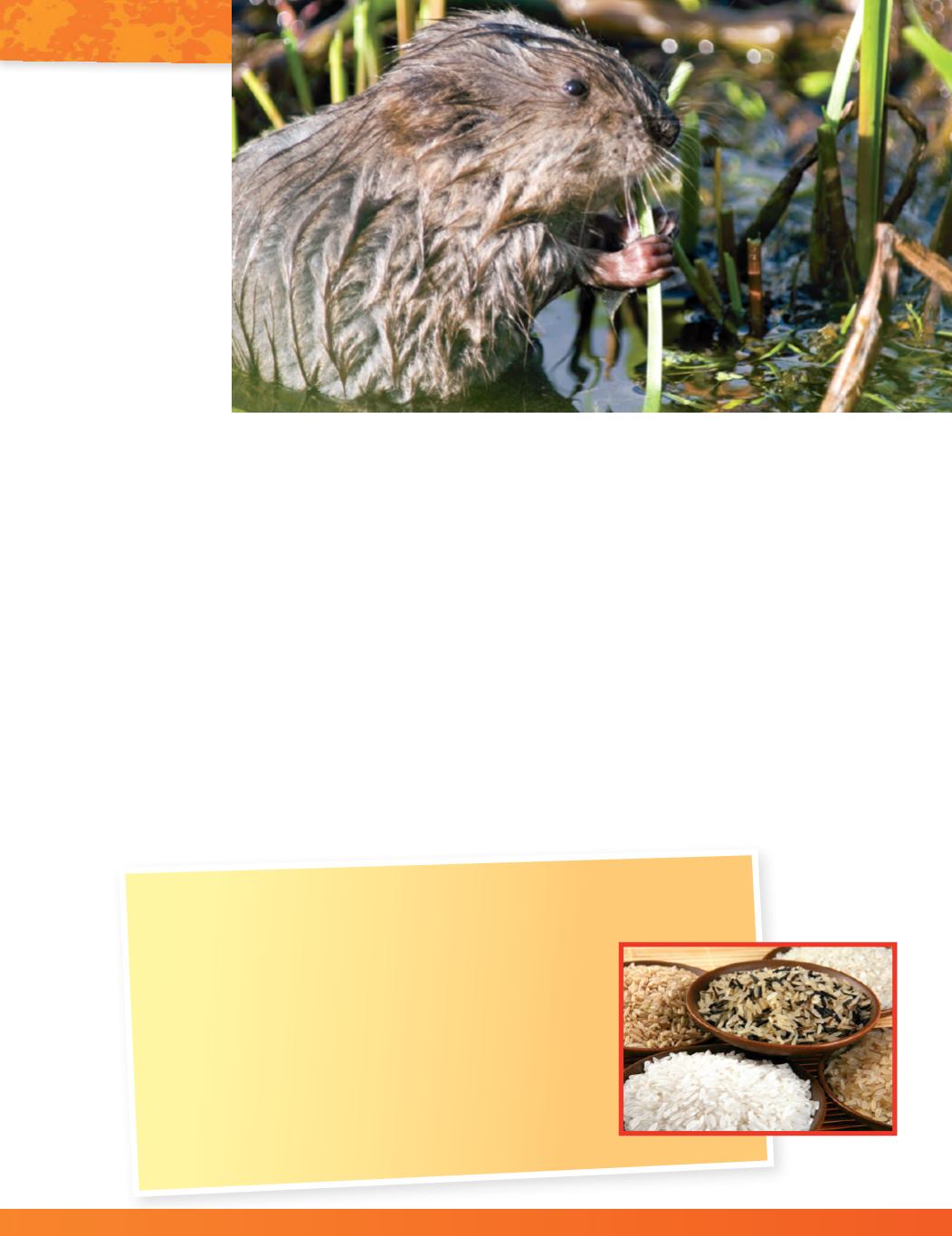
A muskrat
in a rice
paddy
Thinking about Changing Environments
1.
Grains are grass seeds used for human food.
What other kinds of seeds do humans use
for food?
2.
How do environments change when humans
make rice paddies?
3.
How can muskrats change their environment,
and what are some of the results?
11