



 91 / 116

T
here are many similarities between a crayfish, a snail, and you! There
are many differences, too. Let’s take a look at what is the same and
what is different.
Skeleton
A crayfish’s skeleton is on the outside of its body. It protects the crayfish
from predators and other dangers. This exoskeleton doesn’t grow with the
crayfish. The crayfish has to shed its too-small shell to grow. A crayfish can
also grow a new leg or claw if the old one is lost or damaged.
A snail has an outer shell that protects it from predators, too. A snail’s
shell grows along with the snail’s body for the first 2 years of its life. The
snail never sheds its shell. If a snail’s shell cracks or breaks, it does not grow
a new one.
Your skeleton is inside your body. It
provides structure, gives your body shape,
protects your internal organs, and allows
for movement. Your skeleton keeps growing
along with you. You can’t grow a new arm
or leg, but if you break a bone, new bone
tissue will usually grow to heal the injury.
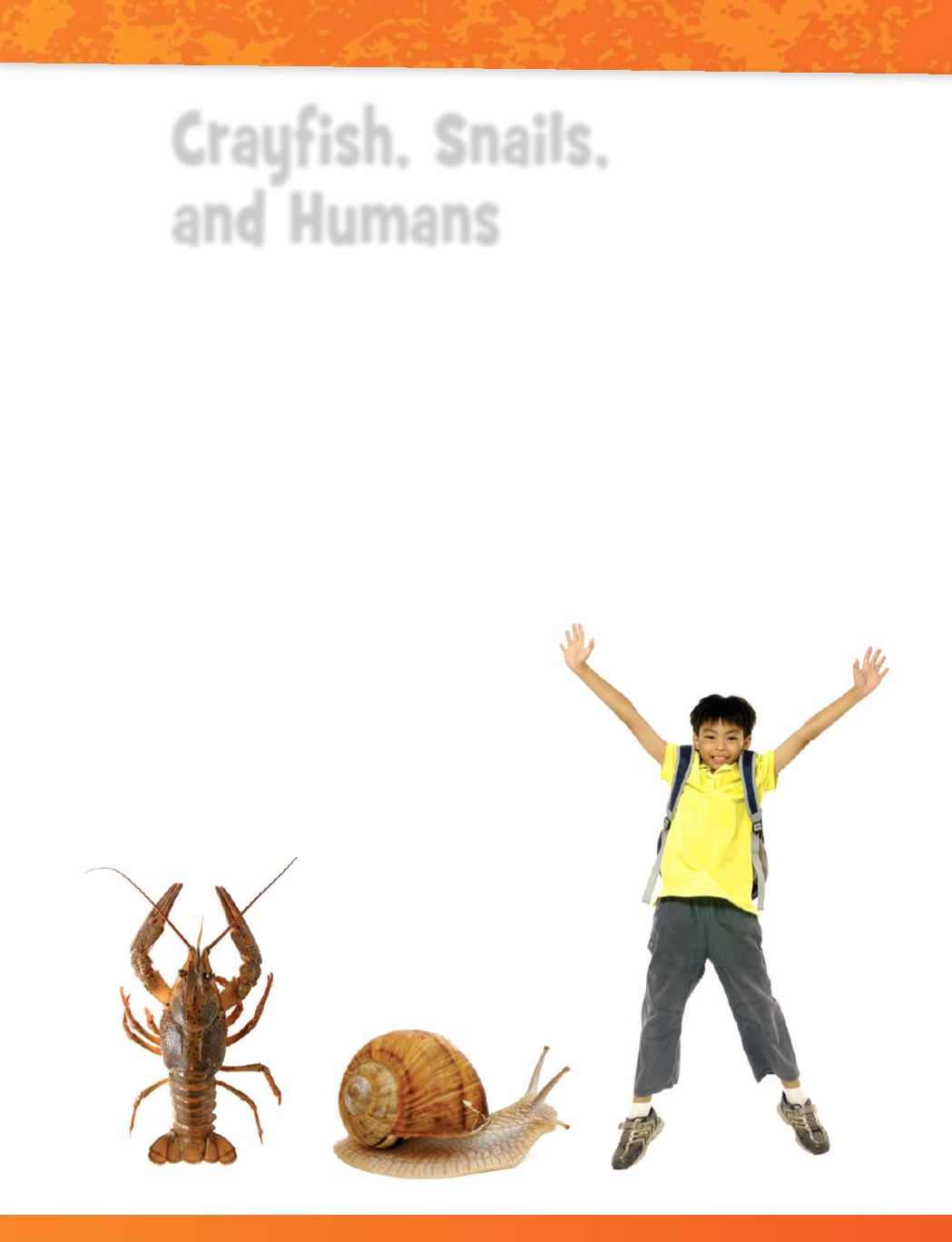
Crayfish, Snails,
and Humans
What structures are similar
on crayfish, snails, and
humans? What structures
are different?
91