



 101 / 116

Many people share the same fingerprint pattern, but details in the
pattern make one fingerprint different from another. Scientists who
study fingerprints look at ridge endings, ridge fragments, and places
where ridges split. They notice how these details are positioned. This is
what makes each fingerprint unique.
In the 1880s, Sir Francis Galton (1822–1911) observed that each
person’s fingerprints are different. He claimed they would not change.
That was the beginning of fingerprint science. Because fingerprints are
unique, they can identify people. The fingerprints of crime suspects can
be compared to prints left at the scene of a crime. The first case known
to be solved by fingerprints was in 1892. There was a murder in La Plata,
Argentina. Fingerprints at the scene belonged to a woman in the house.
She had accused a neighbor of the crime. Faced with the fingerprint
evidence, the woman confessed.
In 1897, Sir Edward Richard Henry (1850–1931) set up a system for
classifying fingerprints. Henry was London’s assistant commissioner of
police. The Henry system compares inked fingerprint cards on file. It
identifies people through their fingerprint patterns. The Henry system
is still used today.
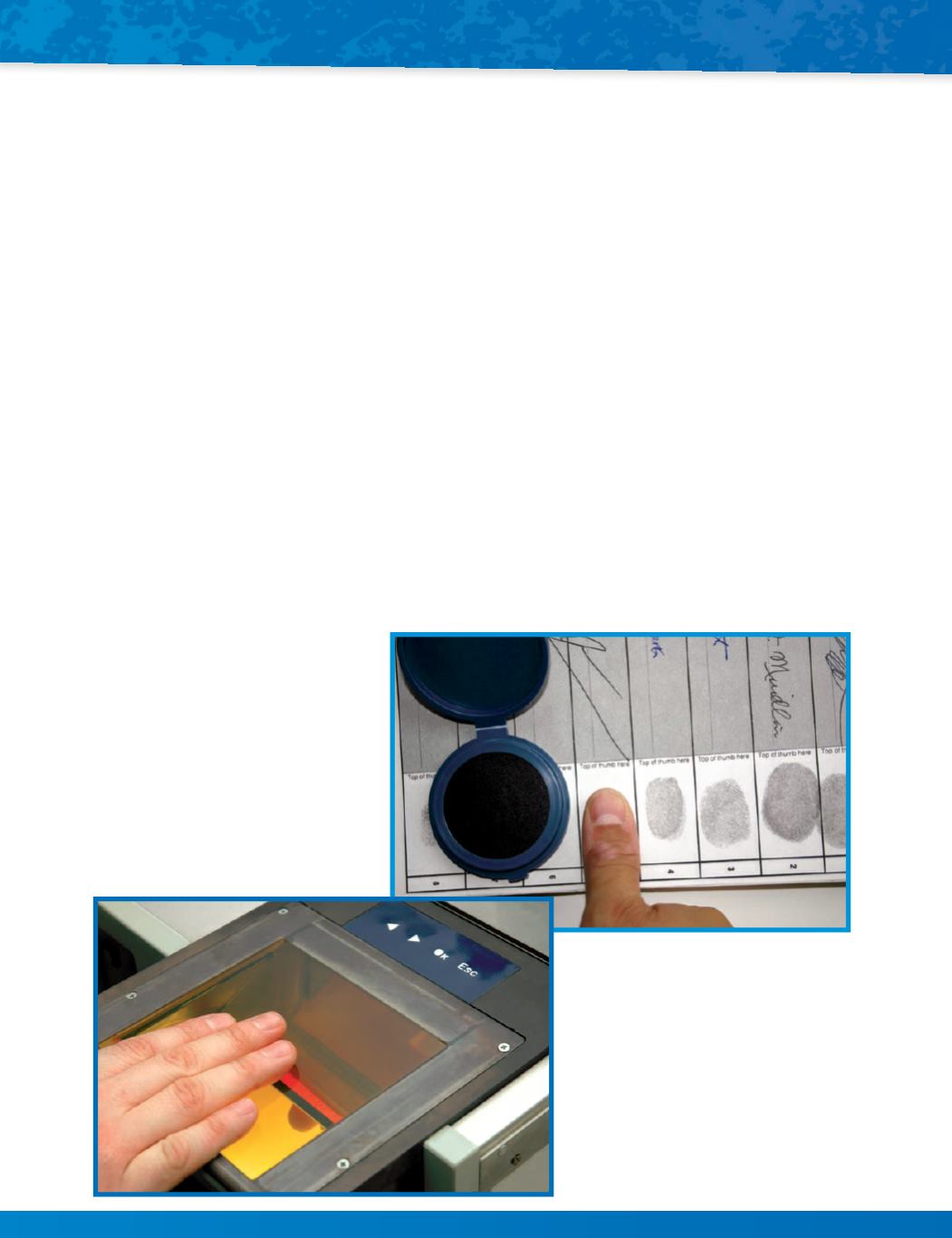
Making a digital print
Making an inked print
101