



 103 / 116

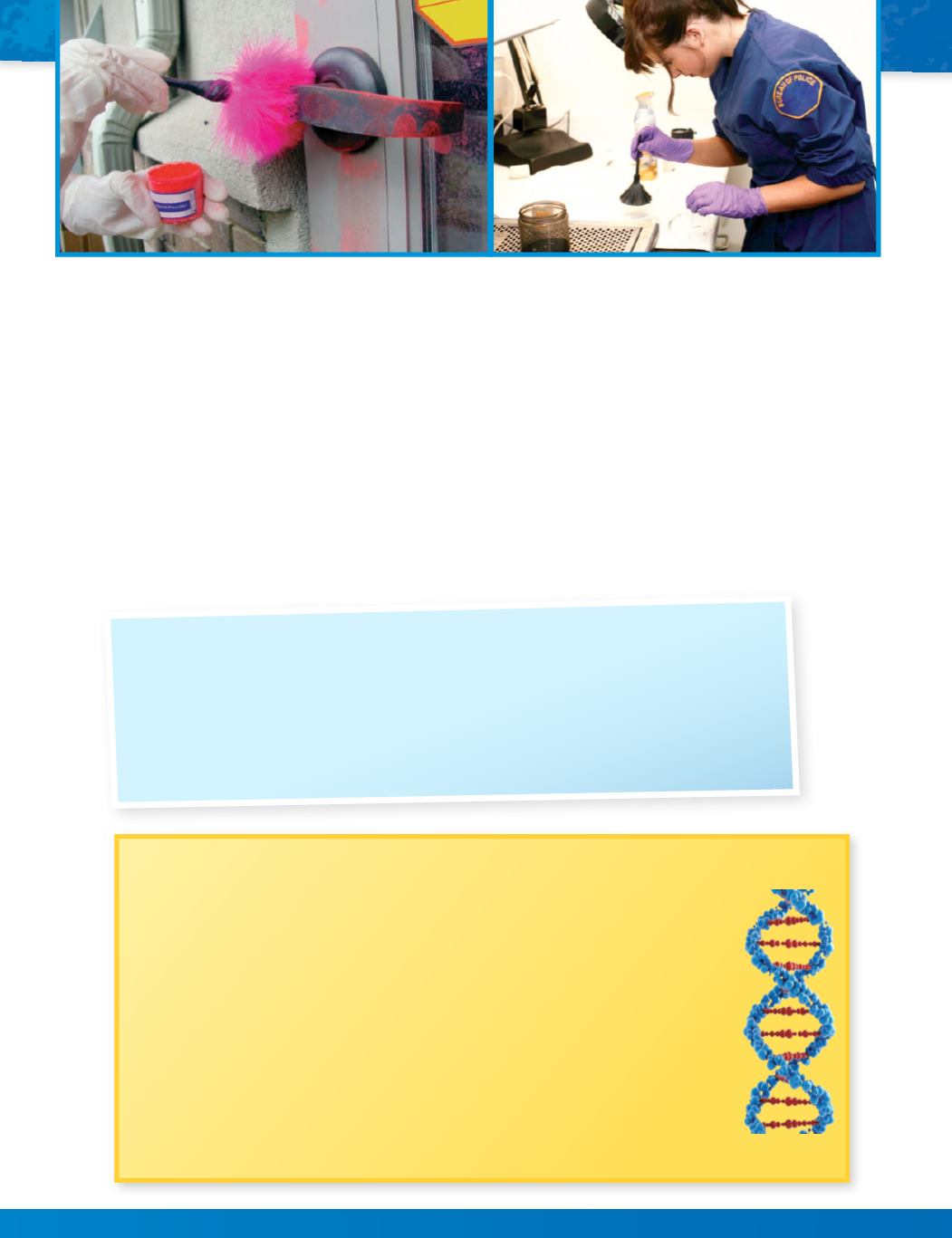
Forensic scientists have ways to make latent prints visible. Prints might
appear when they are brushed with special powders. The powders stick to
oil and sweat. Ninhydrin is one of many chemicals used to see latent prints.
It works by reacting with acids in sweat. Prints can then be photographed
and matched with prints on file. In that way, criminals can be identified.
Forensic science has been helped by tools such as the automated
fingerprint identification system (AFIS). Using computers, AFIS can compare
even a small portion of a print against millions of fingerprints on file. AFIS
uses ridge characteristics to make a list of matches. The final comparisons
are made by fingerprint scientists.
DNA
All living cells contain a genetic material called
DNA
(deoxyribonucleic acid). Your DNA is responsible for who you are
and how you look.
Everyone’s DNA is made of the same four chemical units called
nucleobases. But those chemical units are arranged in a different
sequence in each person’s DNA. That means DNA can be used to
identify people the same way fingerprints can be used.
DNA sequencing analyzes and compares DNA from different
sources. It’s used to determine which people are related. It can
also connect a person to DNA left at the scene of a crime.
Thinking about Fingerprints
1.
What are the three most common fingerprint patterns?
2.
What is the difference between loop and arch fingerprint patterns?
3.
What is the difference between a latent print and an inked print?
Dusting for fingerprints
103