


 99 / 116

Muscles and Bones Working Together
Check out the muscles and bones that work together to make
movement possible.
Gluteus Maximus—Thighbone and Pelvis
The gluteus
maximus connects the femur, or thighbone, to the pelvic bones. This
muscle controls running, jumping, and climbing.
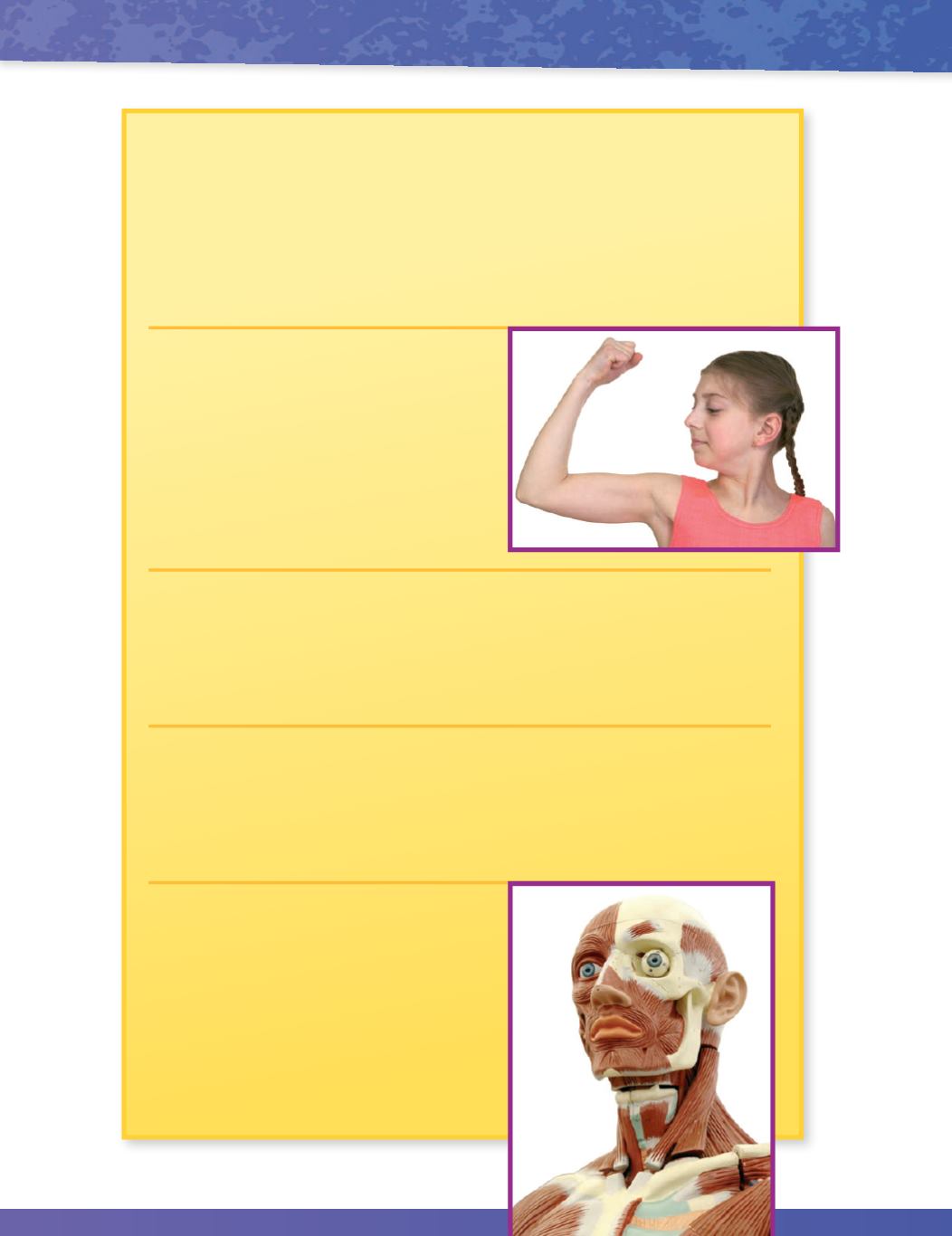
Biceps and Triceps—Arm
Bones
The biceps and triceps muscles
help move the arm bones. The arm
bones are the humerus, radius, and
ulna. Bend your arm at the elbow, and
the biceps contracts while the triceps
relaxes. Straighten your arm, and the
opposite happens.
Various Muscles—Shoulder Blade and Upper Arm
Bone
The shoulder is one of the most flexible parts of the body.
Many muscles are needed to hold the scapula, or shoulder blade, in
place. The deltoid is one of the larger muscles in the shoulder area.
This muscle helps raise the arm.
Calf Muscles—Heel Bone and Lower Leg Bones
The heel
bone is connected to the calf muscles by the Achilles tendon. It is the
longest and strongest tendon in your body. Calf and shin muscles
also connect your lower leg bones, the tibia and fibula, to your ankle.
These muscles help bend and straighten the ankle.
Neck Muscles—Skull and
Spine
Pairs of muscles in your neck
connect your skull to your spine. Each
pair of muscles moves the skull in a
different direction.
99