


 63 / 116

Organism Diversity
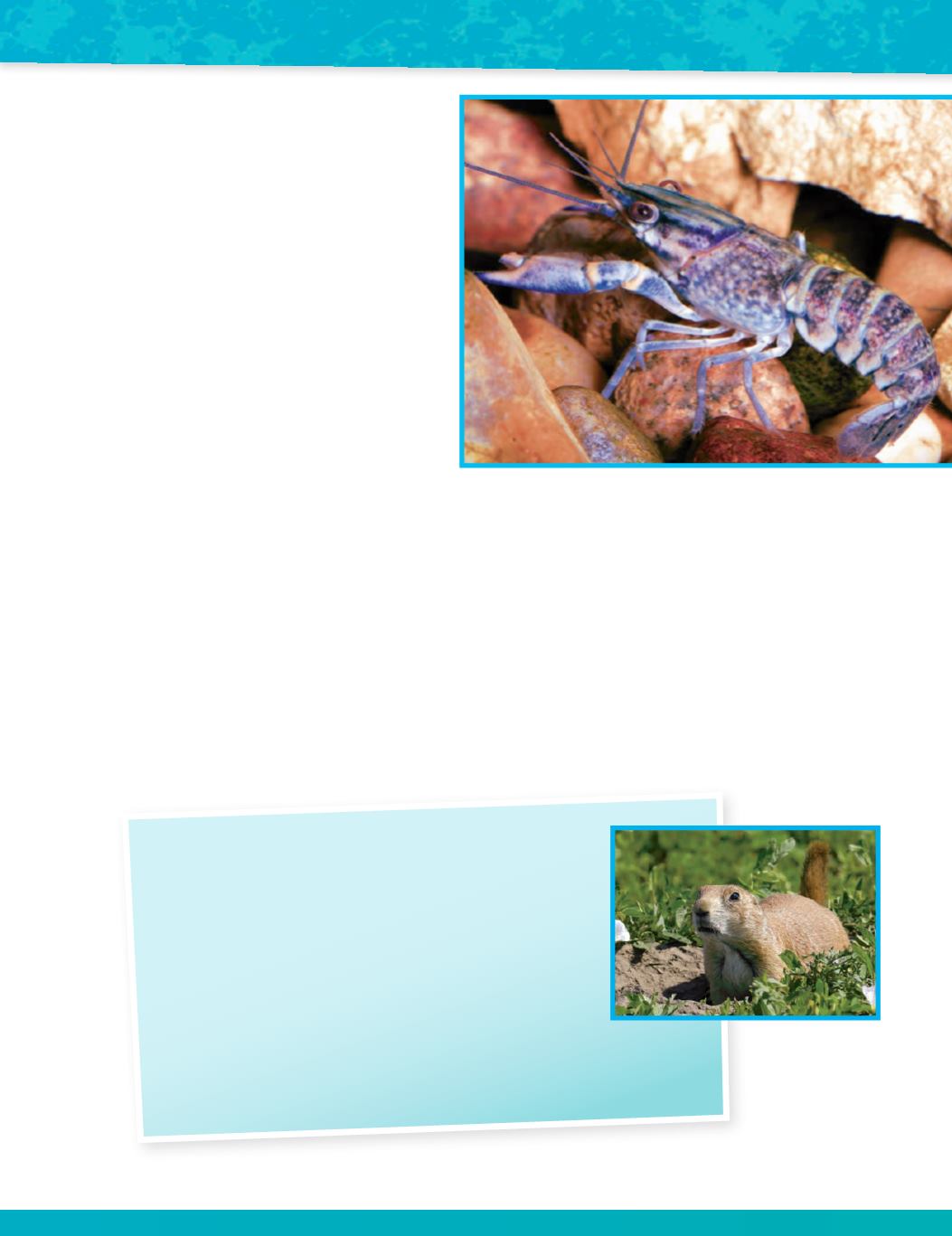
The crayfish is an example
of a successful organism. It
has adaptations that allow it
to live in lakes, ponds, and
streams. The crayfish has gills
for getting oxygen from water.
It has pincers for getting food.
It has a broad tail for fast
movement through water to
escape danger. Crayfish carry
their eggs under their tails to
make sure the eggs are safe
while they develop. Crayfish
have antennae to find food in the dark. All of these adaptations make
it possible for crayfish to survive, grow, and reproduce in aquatic
environments.
The crayfish’s adaptations would not help it survive in a grassland.
Its gills would not get oxygen from the air. It doesn’t have strong claws
to dig a tunnel for shelter. Crayfish can’t run fast or fly to escape range
fires. Crayfish are not adapted to live in grasslands. Prairie dogs, horned
larks, and bison are adapted to live in grasslands. Organisms live in
environments for which they have adaptations.
Thinking about Life on Earth
1.
What kinds of organisms live in wetlands?
2.
What kinds of organisms live in grasslands?
3.
What kinds of organisms live in the ocean?
4.
What kinds of organisms live in forests?
5.
What kinds of organisms live in the tundra?
6.
What kinds of organisms live in deserts?
A crayfish has adaptations to survive in
fresh water.
63