


 62 / 116

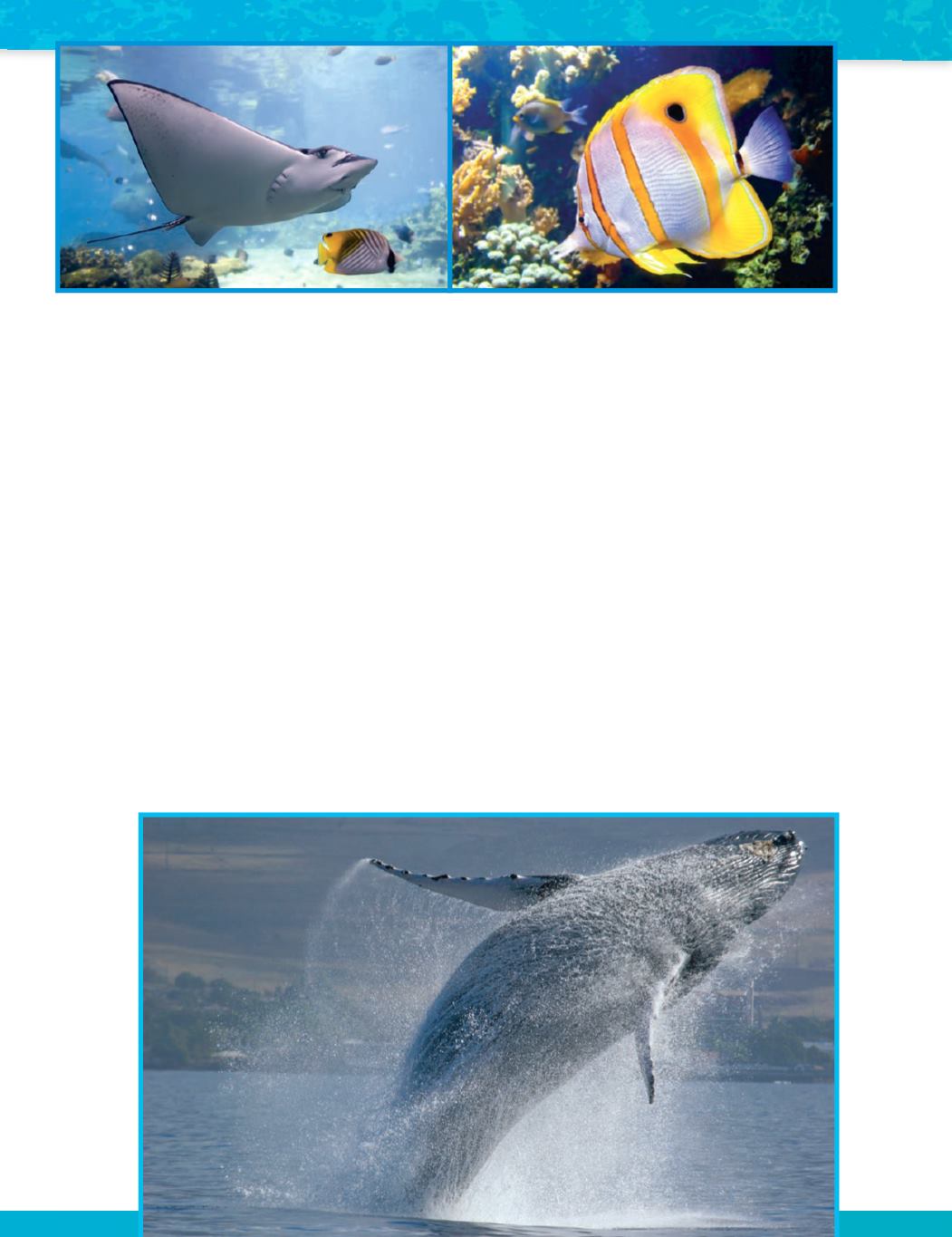
A humpback whale
The corals build huge reefs that provide many places for other animals
to grow, hide, and find food. The reef benefits animals that need a
surface to stick to, like snails and clams. The reef benefits animals that
need places to hide, like shrimp and lobsters. The reef provides a resting
place for ocean travelers like the green sea turtle.
Some ocean organisms live part of the year in cold ocean waters and
other times of the year in warm tropical ocean waters. Humpback whales
are found in the ocean and seas around the world. They migrate up to
25,000 kilometers (km) each year. They feed on krill and small fish in the
summer in the cold polar environment. In the winter, the whales migrate to
tropical waters to breed and give birth. They don’t eat during that time but
live off the fat in their bodies built up during the winter. Adult humpback
whales are very large mammals. They are 15 to 17 meters (m) long. Young
whales, called calves, are about 6 m long. Humpback whales are adapted to
live in both polar and tropical waters at different times of the year.
A stingray
A butterfly fish
62