



 65 / 116

Snail Facts
•
Snails have shells. Their close
relatives, slugs, do not. The shell
is the main difference between
snails and slugs.
•
Snails are part of the class called
gastropods
. That word is from
two Greek words.
Gastro
means
“belly.”
Pod
means “foot.”
•
A snail’s tongue can have as many as 150,000 teeth.
•
Snails produce slime to help them move.
•
A snail makes its shell bigger by adding new shell material around
the opening of the shell.
•
There are about 40,000 different kinds of snails.
•
Snails live on land, in fresh water, and in the ocean.
•
The largest land snail is found in Africa. Its shell can be
25 centimeters (cm) long!
•
Most land snails are both male and female. That means any snail
can produce eggs.
•
Land snails lay from 30 to 50 tiny eggs in a hole in the ground. The
snail doesn’t stay to protect the eggs, so many are eaten by insects.
•
A snail’s shell grows for the first 2 years of its life. By then, the shell
can have four or five coils.
•
Snails are right-handed
or left-handed. If a snail’s
shell coils to the right, it is
right-handed. A left-handed
snail has a shell that coils
to the left.
•
Most snails live about
3 or 4 years.
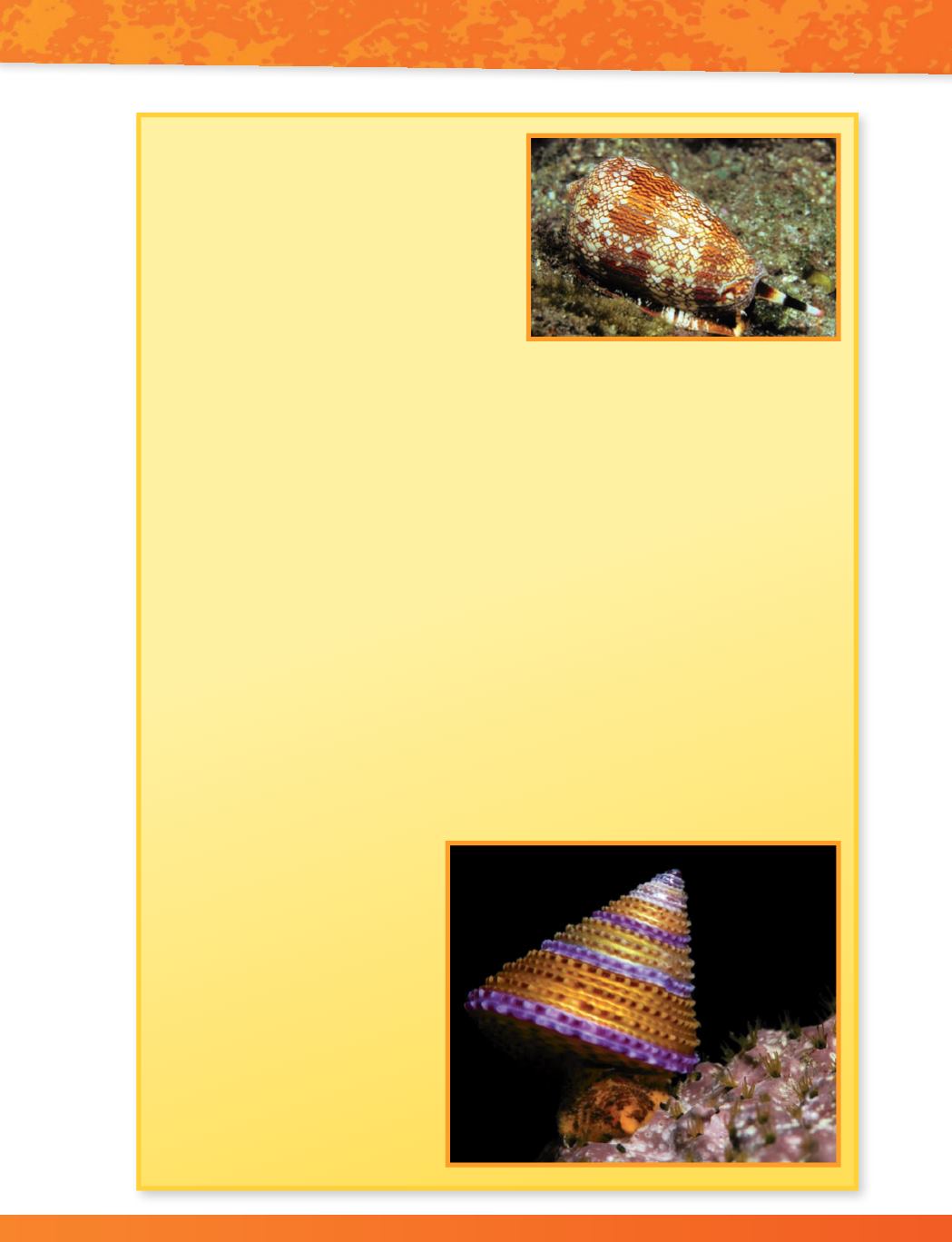
A jewel top snail
A cone snail is armed with
a poisonous stinger.
65