


 40 / 116

Classroom Crayfish
Crayfish are easy to keep in
the classroom. All they need
is clean, cool water, food to
eat, and a place to hide. By
observing closely, you can see
how they use their antennae
to sense their environment.
You can see how they use their
pincers to defend themselves
and to get food. You might
be able to see the several
mouthparts working as they eat. And you might see them using the small
pincers on their walking legs to clean their antennae. You can learn a lot
about how their structures and behaviors help crayfish survive and grow in
their aquatic environment.
Being Environmentally Responsible
Crayfish are wonderful organisms to study in the classroom, but they
can cause problems if they are released into local outdoor environments.
The rule is that you never release classroom crayfish or any other organism
into natural areas. And if you collect native crayfish from local ponds,
you should return them to exactly the same pond, and not move them to
another body of water.
Why is this important? There are about 380 different species, or kinds,
of crayfish in North America, more than on any other continent. Each
kind of crayfish lives in a particular
freshwater environment. When
an organism is found naturally in
an area, it is native to that region.
The classroom crayfish may not be
native to your region. If an organism
isn’t naturally found in an area, it is
nonnative to that area.
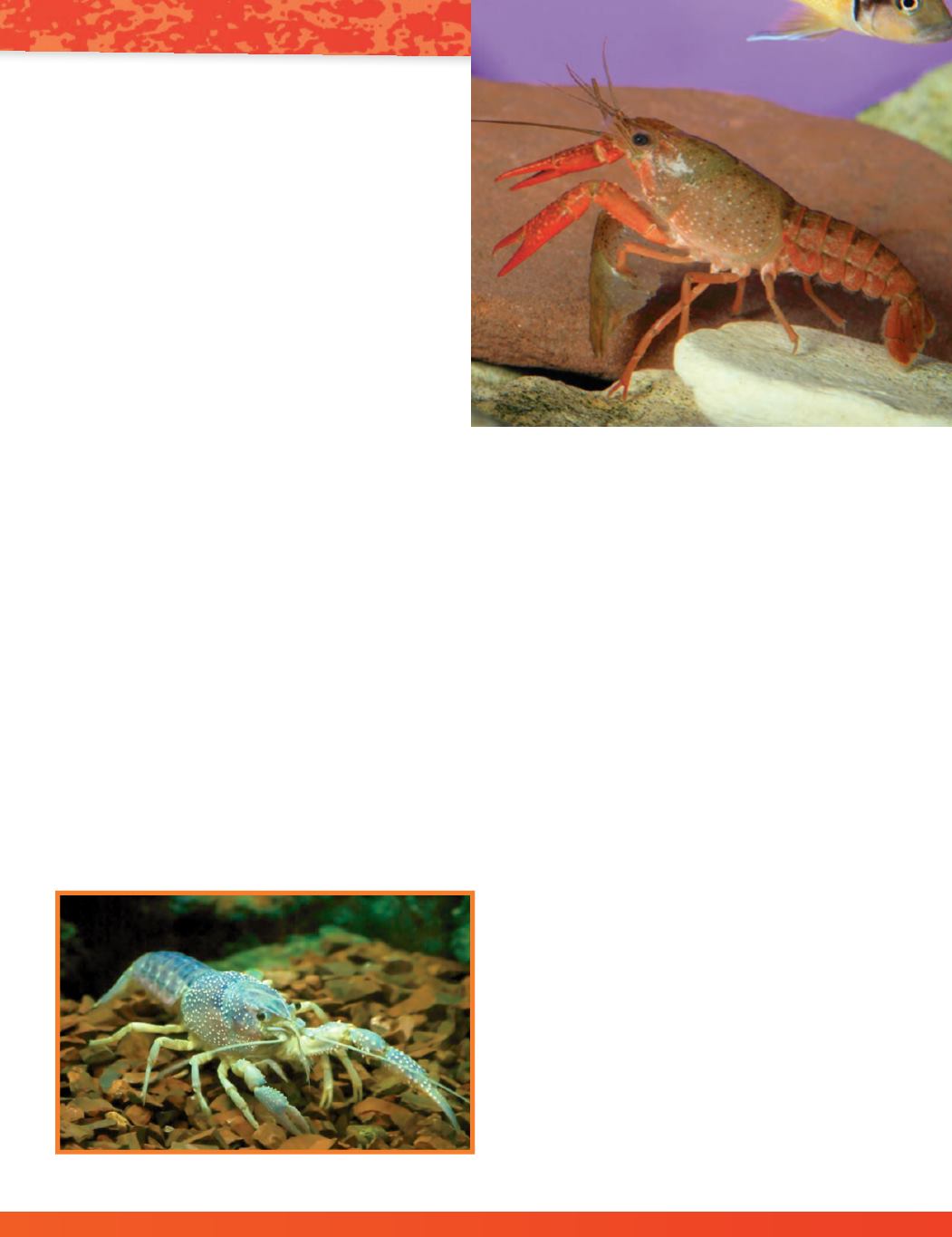
A crayfish in an aquarium
Be responsible when studying
crayfish!
40