


 41 / 116

Thinking about Crayfish
1.
What structures help crayfish move around in their environment?
2.
What structures help crayfish get food in their environment?
3.
What structures and behaviors allow crayfish to defend and protect
themselves in their environment?
4.
What structures and behaviors allow crayfish to successfully raise
offspring in their environment?
5.
How might one kind of crayfish become an invasive organism?
6.
Find out if there are any invasive plants or animals in your area.
What is being done to prevent their spread?
Sometimes, people introduce
nonnative organisms to an
area, either intentionally or by
accident. Nonnative crayfish
used as fishing bait, pets, or
science projects should never
be released. The introduced
crayfish can cause problems by
eating the native plants and
competing with native animals
for food and shelter. Introduced crayfish can eat native animals,
including insects, snails, tadpoles, frogs, baby turtles, fish eggs, fish,
and snakes. And if there are native crayfish, the nonnative species may
endanger
the native species. Over time, the local crayfish might be
entirely replaced by the introduced species.
If an introduced organism thrives in a new area and causes problems,
it is called an
invasive
organism. Invasive organisms are changing
ecosystems all over the United States. It is important to know how
invasive species are introduced and how to prevent their spread.
So remember to do your part to protect your local environment.
Never release classroom organisms into local areas.
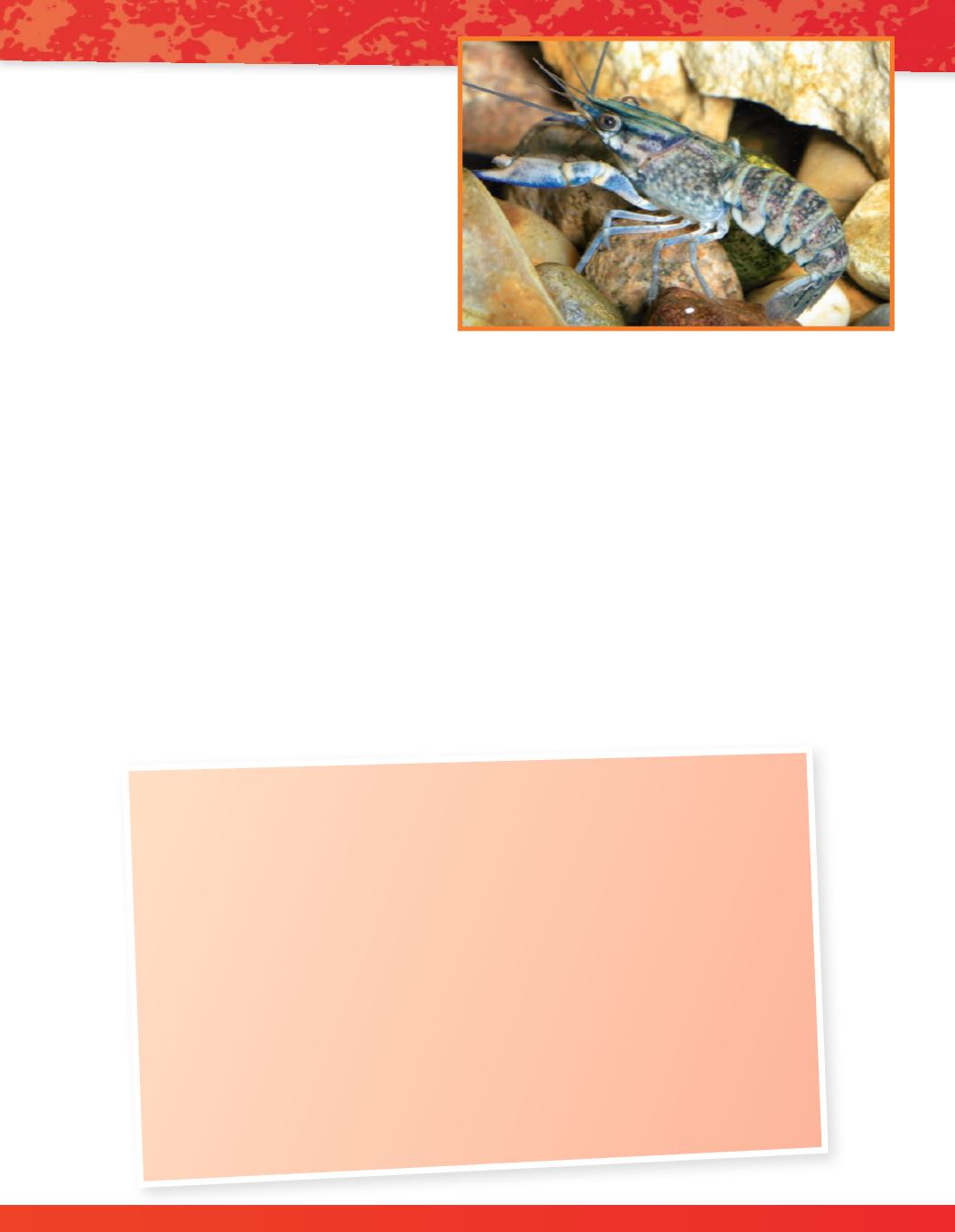
A blue crayfish
41